Developer Tool, AI, Productivity
Prodigent
Engineering intelligence, built on institutional knowledge.
Watch Prodigent demo
About Prodigent
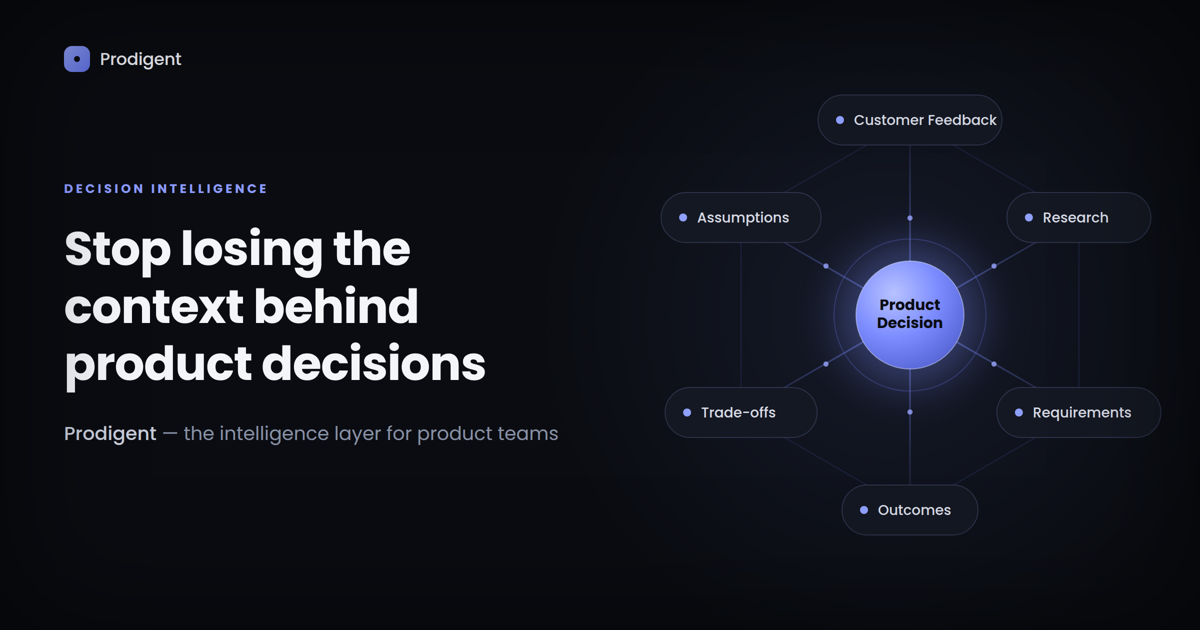
Prodigent captures and connects institutional knowledge across engineering systems, architecture decisions, historical incidents, and code constraints. Engineers query their organization's internal history in plain text to get contextual answers linked directly to components, past trade-offs, and subject matter experts. It turns fragmented conversations, tickets, and docs into a unified knowledge graph for system design and troubleshooting.
Who is Prodigent for?
Engineering teams and software architects who previously relied on scattered Slack threads, outdated wiki docs, and tribal knowledge stored inside individual senior engineers' heads. It serves developers trying to understand legacy architectural choices, constraint history, or system ownership before making major updates to existing services or designing new features.
How does Prodigent work?
First, ask questions in plain language about architecture, prior incident roots, or design decisions. Next, explore connected knowledge cards detailing components, active constraints, and specific engineers who own the system. Finally, design new technical solutions with automatic context surfacing and record your design reasoning for future team members.